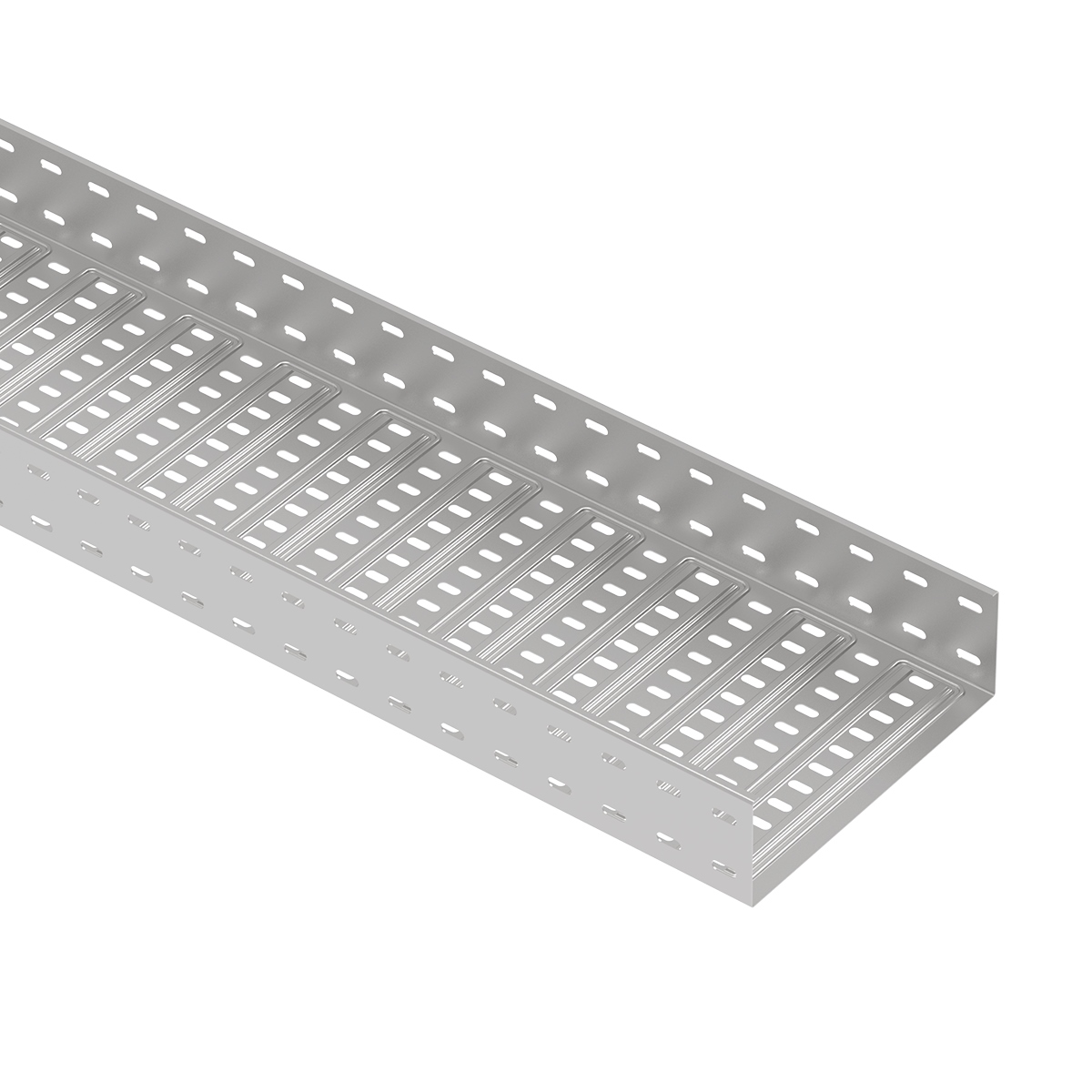
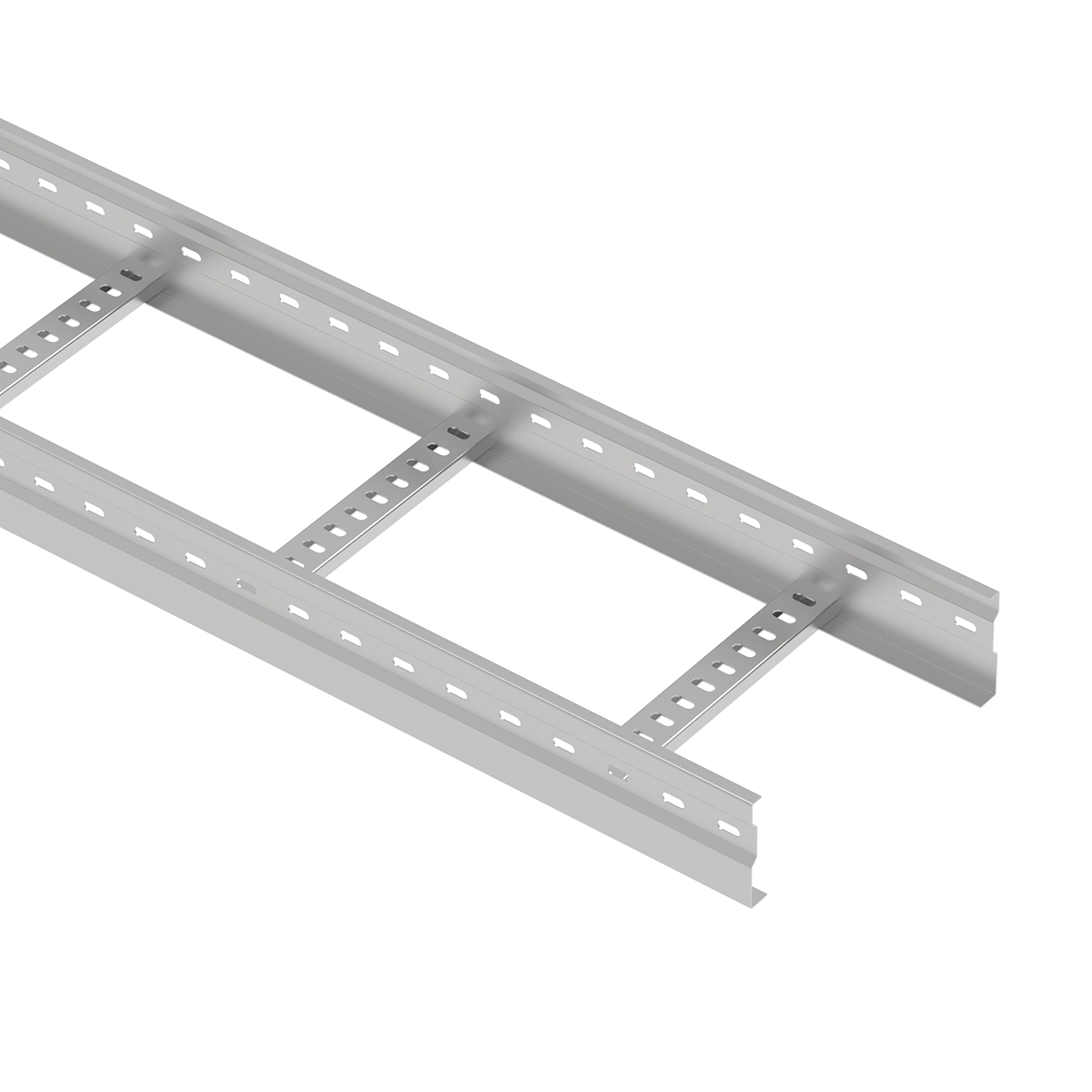
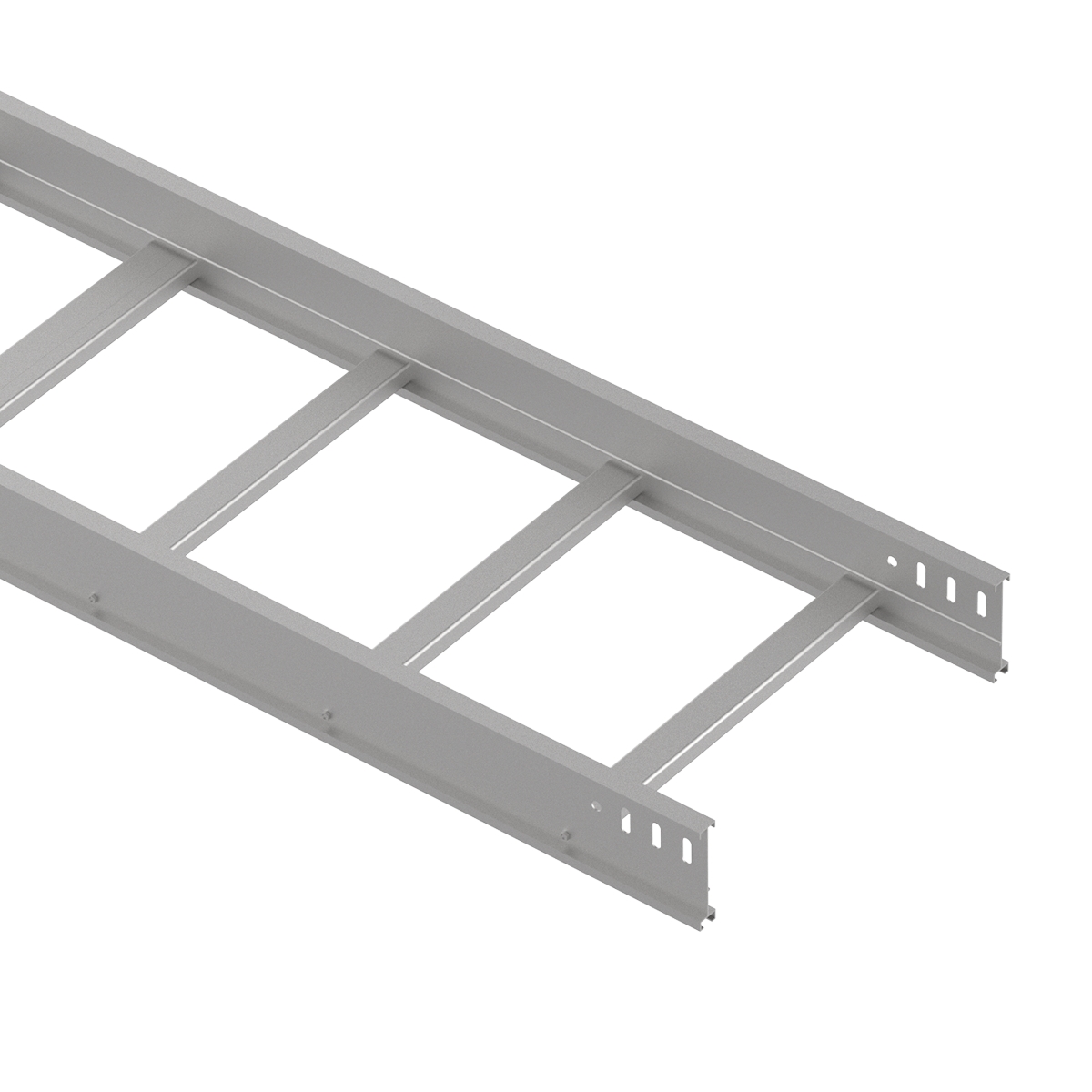
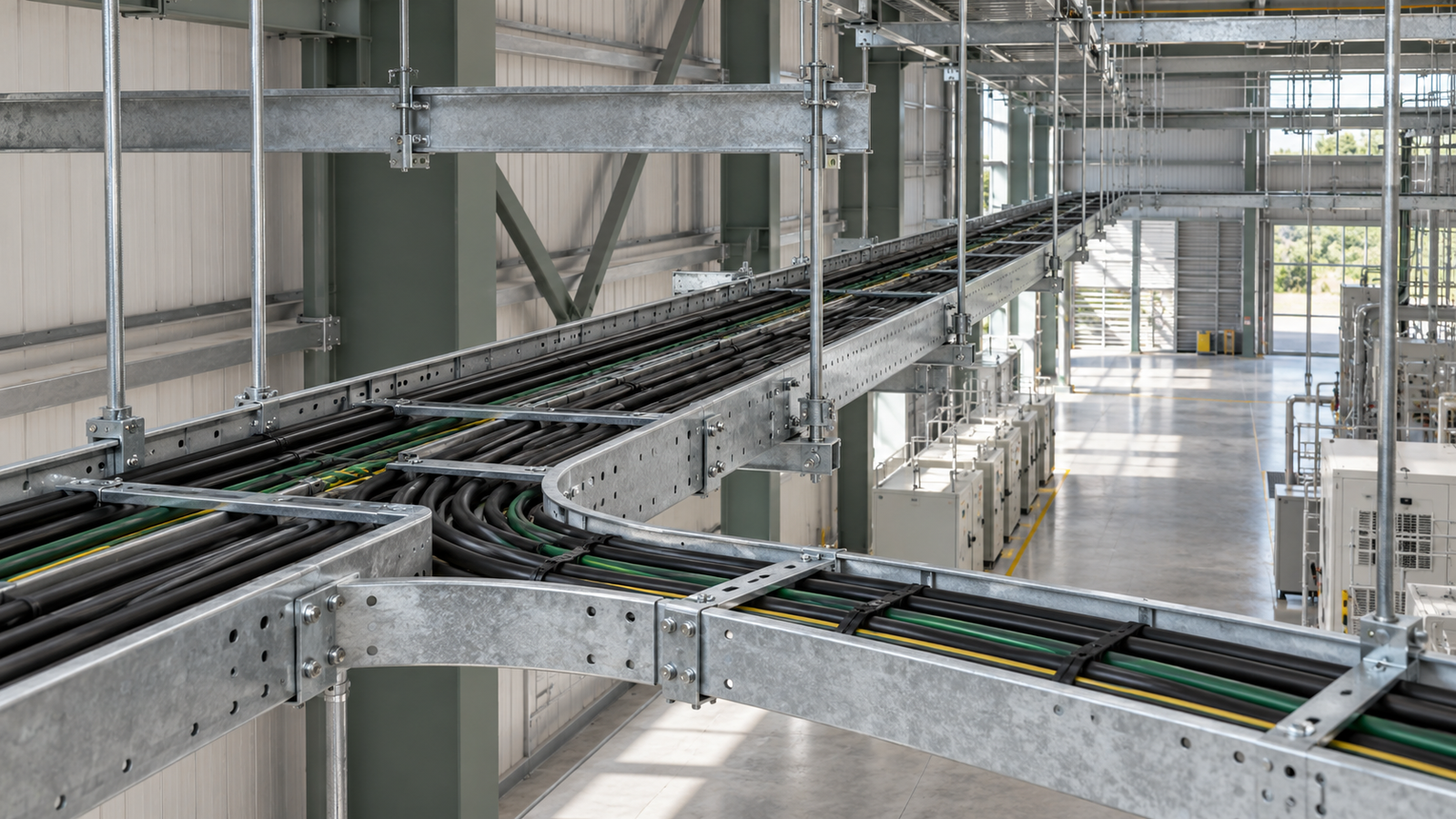
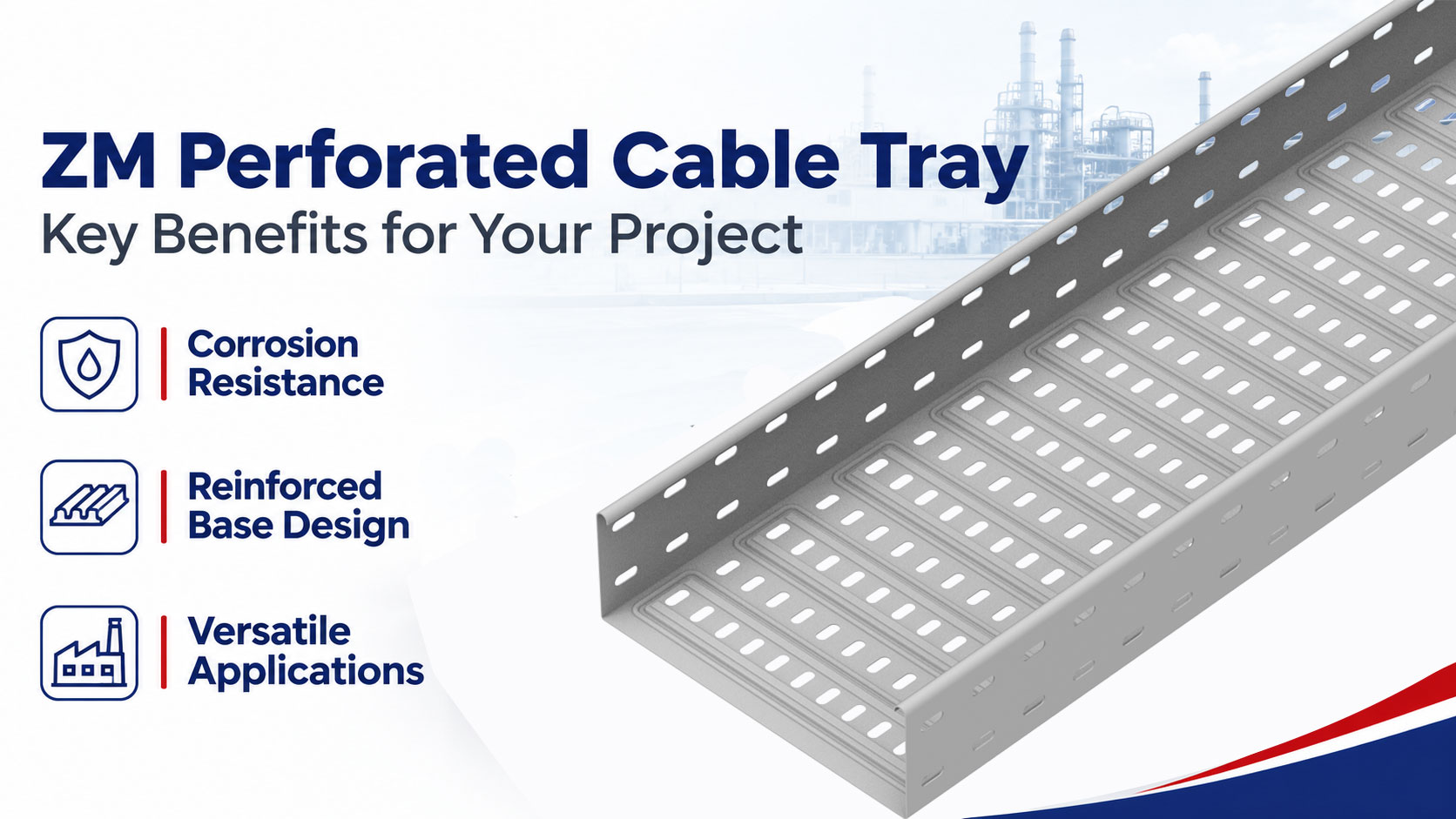
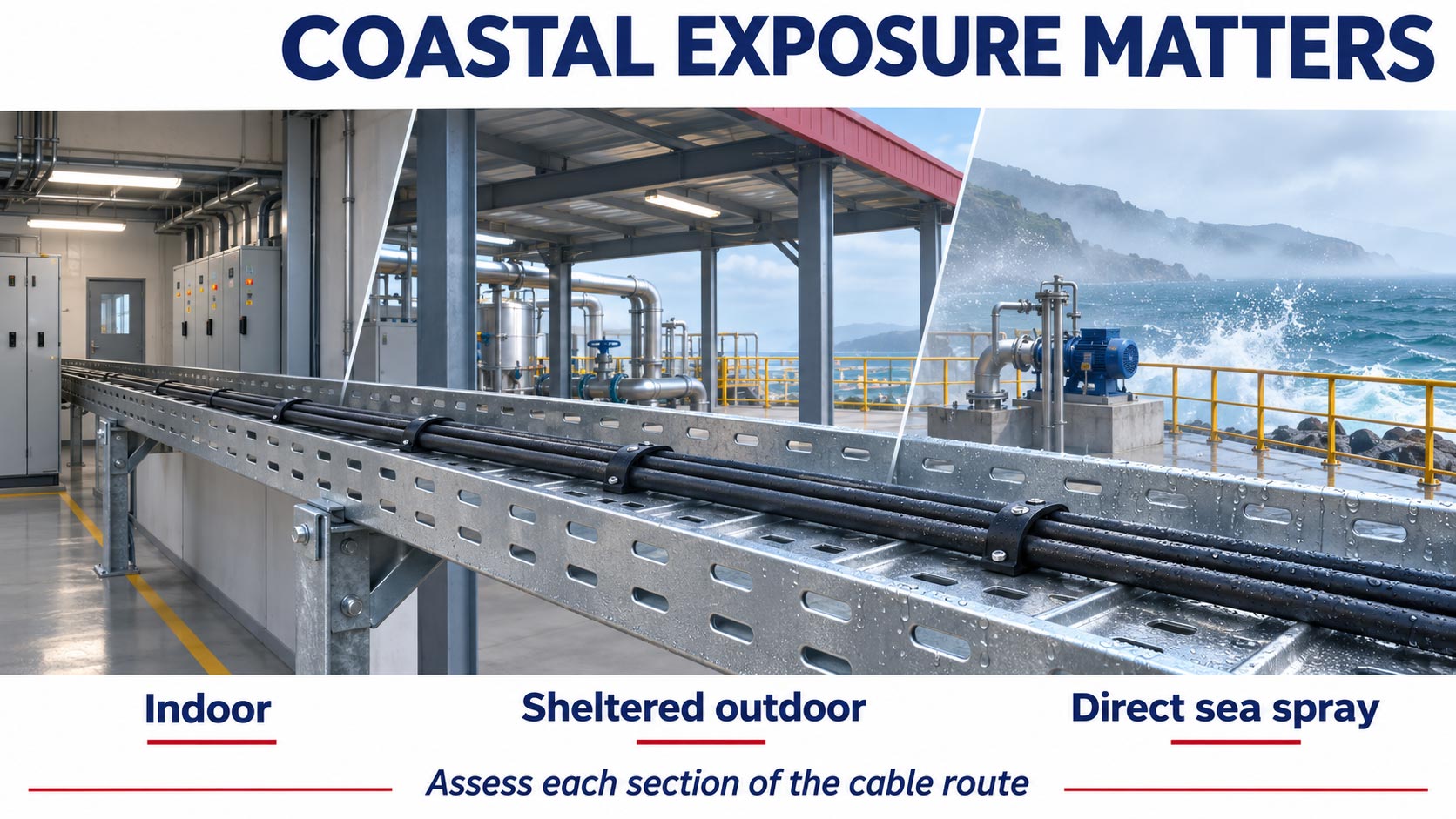
Selecting a perforated cable tray for a coastal project starts with understanding the installation environment. A tray inside an enclosed electrical room may face very different conditions from one beneath an open-sided roof or on a platform exposed to sea spray.
Distance from the shoreline provides useful context, but it does not describe the complete exposure. Wind direction, salt accumulation, condensation, rain washing and maintenance access all influence the selection.
This guide explains how to assess those conditions, compare materials and finishes, and check the complete cable tray system before procurement.
Wind can carry salt inland and deposit it on cable trays, supports and connection points. The amount reaching an installation depends on local conditions, including prevailing winds, surrounding buildings, terrain and exposure to breaking waves.
Record the project’s location and identify whether the cable route faces incoming marine winds. Different sections of the same route may require separate assessments.
Coastal exposure also depends on how often surfaces become wet and how long they remain damp. High humidity, condensation and repeated wetting can create conditions that support corrosion where salts have accumulated.
Check for overnight condensation, water dripping from nearby equipment and locations that dry slowly. An indoor installation should not automatically be treated as a dry environment.
A roof can reduce direct rainfall while still allowing airborne salt to reach the tray. In sheltered locations, salt deposits may remain because rain cannot wash them away.
Assess both exposure to salt and opportunities for cleaning. Areas beneath roofs, equipment or structural overhangs deserve particular attention when planning inspection and maintenance.
Airborne salt exposure should be distinguished from direct seawater splash or immersion. These conditions can place substantially different demands on the selected material or protective system.
For coastal industrial facilities, also identify chemical fumes, process releases and contaminated dust. A selection based only on marine exposure may overlook additional corrosive substances.
Divide the route into practical exposure zones before specifying one material for the entire project.
| Installation location | Conditions to verify |
|---|---|
| Enclosed electrical room | Salt entry through ventilation, humidity and condensation |
| Semi-open industrial building | Wind-driven salt, sheltered deposits and cleaning access |
| Outdoor rooftop | Salt accumulation, rain washing, drainage and inspection access |
| Coastal equipment platform | Direct spray, splash frequency and persistent wetting |
| Coastal industrial area | Combined exposure to sea salt and process pollutants |
This table supports a site survey; it does not assign a formal corrosion category. Where the project specification requires an environmental classification, confirm it using the applicable assessment method and site information.
Material selection should connect the actual environment with a clearly defined product specification. Terms such as “galvanized” or “powder coated” are not sufficient on their own.
| Option | What to confirm before selection |
|---|---|
| GI — Pre-galvanized steel | Suitability for the identified exposure, coating specification, and requirements for punched edges, cuts and site modifications |
| HDG — Hot-dip galvanized after fabrication | Finished coating requirements, fabrication sequence, damage repair procedure and maintenance expectations |
| ZM — Zinc-aluminum-magnesium coated steel | The specific coated-sheet specification, manufacturer guidance, environmental limitations and treatment of fabricated details |
| Stainless steel 304 / 316 | Grade, chloride exposure, surface condition, joint design and cleaning requirements |
| Powder-coated systems | Base material, pretreatment, coating system, outdoor suitability and repair requirements |
GI and ZM generally refer here to metallic-coated sheet products that are subsequently fabricated. HDG after fabrication applies the zinc coating after the tray has been formed and fabricated. These manufacturing differences make cut edges, holes and site modifications relevant to the assessment.
For powder-coated trays, specify what lies beneath the coating. Powder coating over bare steel and powder coating over galvanized steel should not be treated as identical protective systems.
Type 316 is commonly considered for chloride-containing coastal environments, but its suitability still depends on the severity of exposure and the design details.
Heavy salt deposits, direct seawater splash, persistent moisture and difficult cleaning conditions may require a more detailed assessment. Surface finish and crevices also matter; the grade designation alone does not describe the finished installation.
For further background, see the Nickel Institute’s guidelines for corrosion prevention.
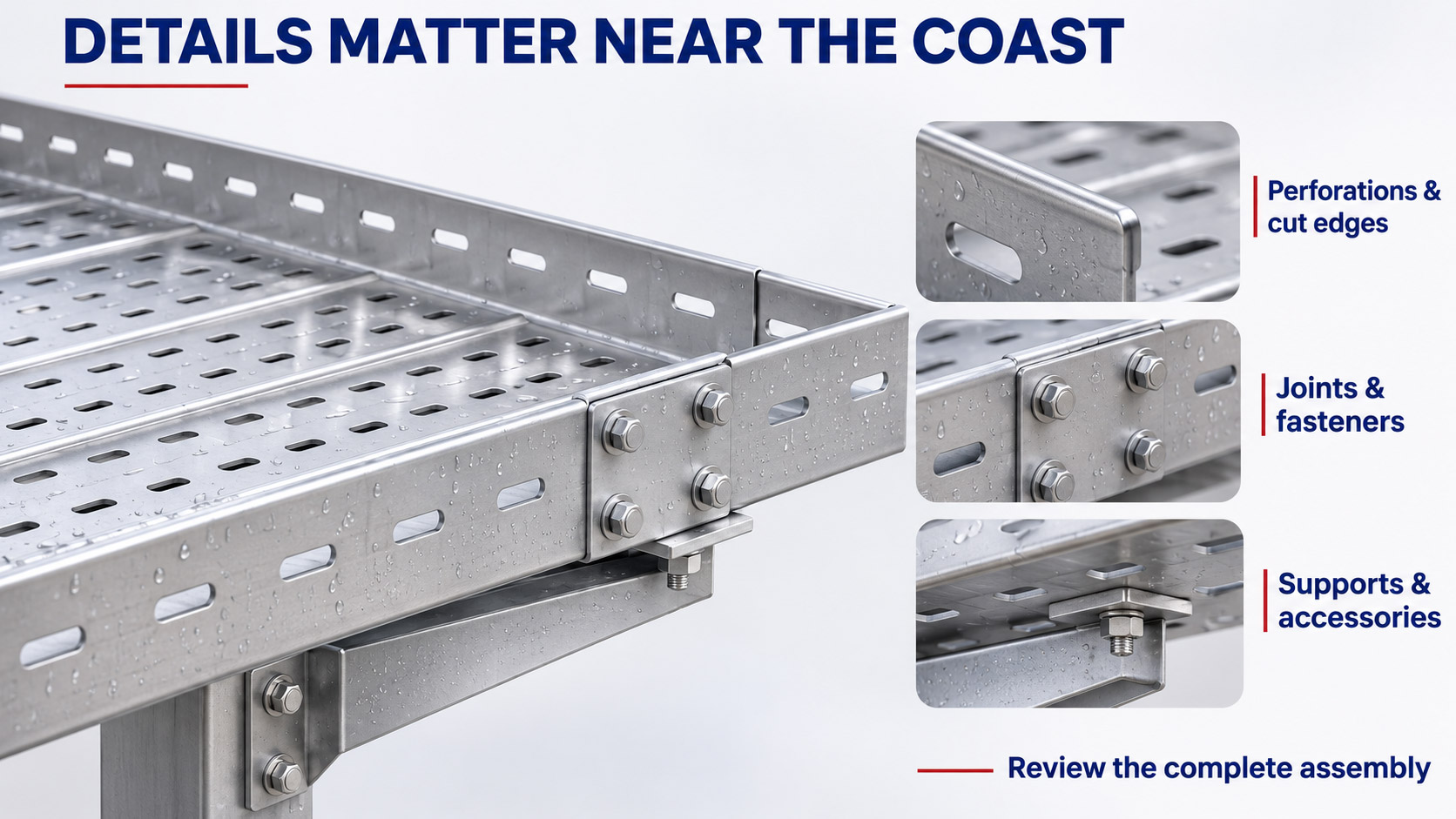
Perforated cable tray selection should include the details created during manufacturing and installation.
Base perforations provide openings through which water can drain, but they do not guarantee that the installed system will remain free of standing water.
Check whether splice plates, debris, mounting arrangements or other details could obstruct drainage. Covered sections should also be reviewed for moisture entry, drying and inspection access.
Confirm how exposed edges and damaged protective layers are to be assessed and treated for the selected material.
Field cutting and drilling can change the condition of a factory-finished product. Include the manufacturer’s approved procedures in the installation requirements, together with suitable repair materials where applicable.
Inspect splice connections, bolt holes and overlapping surfaces as part of the corrosion-control plan. These locations can be difficult to clean or inspect after installation.
Good detailing should support assembly, drainage and future access while meeting the mechanical and electrical requirements of the system.
The tray body is only one part of the installation. Connection plates, bolts, nuts, washers, brackets, threaded rods and cover fixings also need defined material and protection requirements.
Check the following before ordering:
Stainless steel fasteners may be part of the selected solution, but changing the bolt material alone does not establish the corrosion suitability of the complete assembly.
Use this checklist during specification review, supplier discussions and quotation comparison.
| Check | Information to confirm |
|---|---|
| □ Installation zones | Indoor, semi-open, outdoor and directly exposed sections |
| □ Salt exposure | Airborne deposits, direct spray, splash or immersion |
| □ Moisture conditions | Humidity, condensation, repeated wetting and standing water |
| □ Cleaning conditions | Natural rain washing, manual cleaning and access |
| □ Industrial pollutants | Relevant chemicals, fumes, dust or process releases |
| □ Material and finish | Base material, grade, metallic coating or complete coating system |
| □ Fabrication details | Perforations, cut edges, joints and site modifications |
| □ Accessories and supports | Fastener, splice plate, bracket and cover-fixing specifications |
| □ Load and support span | Cable weight, tray configuration, proposed span and supporting load data |
| □ Supplier documents | Material identification, coating information and relevant test reports |
| □ Maintenance plan | Inspection locations, cleaning, repair and replacement arrangements |
| □ Project requirements | Intended service conditions, design requirements and applicable specifications |
Tray section length and support span must be recorded separately. A three-metre tray section does not automatically permit three metres between supports.
Corrosion protection also does not establish load capacity. Verify the selected tray configuration against the required load and proposed support arrangement.
Supplier documents should identify the material or coating tested and explain the test method, sample condition and results. Confirm whether that information applies to the product being offered.
Salt spray test hours should not be converted directly into years of coastal service. The American Galvanizers Association explains that salt spray testing does not reliably predict the real-world performance of hot-dip galvanized steel.
See its guidance on salt spray testing of HDG steel.
Compare the practical cost of inspection, cleaning, repair and replacement alongside the purchase price.
An accessible tray route and a difficult-to-reach elevated installation may justify different maintenance strategies. Establish an initial inspection plan, then adjust it based on observed site conditions and the manufacturer’s guidance.
Give particular attention to sheltered sections, joints, damaged finishes and locations where deposits or moisture collect.
It can be suitable for some coastal atmospheric exposures. Selection should consider the specified coating, local conditions, maintenance expectations and project requirements. Direct splash or severe salt exposure requires additional evaluation.
No single grade is automatically required for every coastal location. Assess actual exposure and project requirements. Type 316 may be an appropriate candidate, but it is not suitable for every marine condition.
ZM can be evaluated as a candidate where the specific coated product’s technical guidance supports the intended environment. Confirm the coating specification, fabrication details and exposure limitations before approval.
Yes. A covered area may receive airborne salt while receiving little natural rain washing. Salt accumulation, condensation and cleaning access should still be assessed.
A well-defined coastal specification starts with the exposure conditions and extends to the complete tray, connection and support system.
For a project-specific discussion, share your installation location, site photographs, material requirements, tray dimensions, cable load and proposed support span.
Contact ECTRAY to discuss perforated cable tray options and the supporting information needed for your project review.