Choosing between a GI and an HDG perforated cable tray starts with understanding how the zinc coating is applied. The process affects protection around punched holes and cut edges, the coating requirements you should specify, and the cost of maintaining the system in service.
For dry, controlled indoor installations, a suitably specified GI tray can be a practical, economical choice. For exposed outdoor routes, galvanizing after fabrication often provides a stronger basis for corrosion protection. Coastal or chemically aggressive locations require a closer assessment of the actual exposure.
This GI vs HDG perforated cable tray comparison explains the differences so you can evaluate quotations against your installation environment and project requirements.
Not sure which finish suits your project? Share your installation location, indoor or outdoor conditions, and any specified coating requirements. Discuss GI and HDG options with ECTRAY.
In this article, GI means pre-galvanized steel, while HDG means hot-dip galvanized after fabrication. Both products typically use a steel substrate; the distinction is the coating process and its position in the manufacturing sequence.
Pre-galvanized sheet can itself be produced by continuous hot-dip galvanizing. GI should therefore not automatically be described as electrogalvanized steel. Because suppliers may use these abbreviations differently, confirm the process in the quotation.
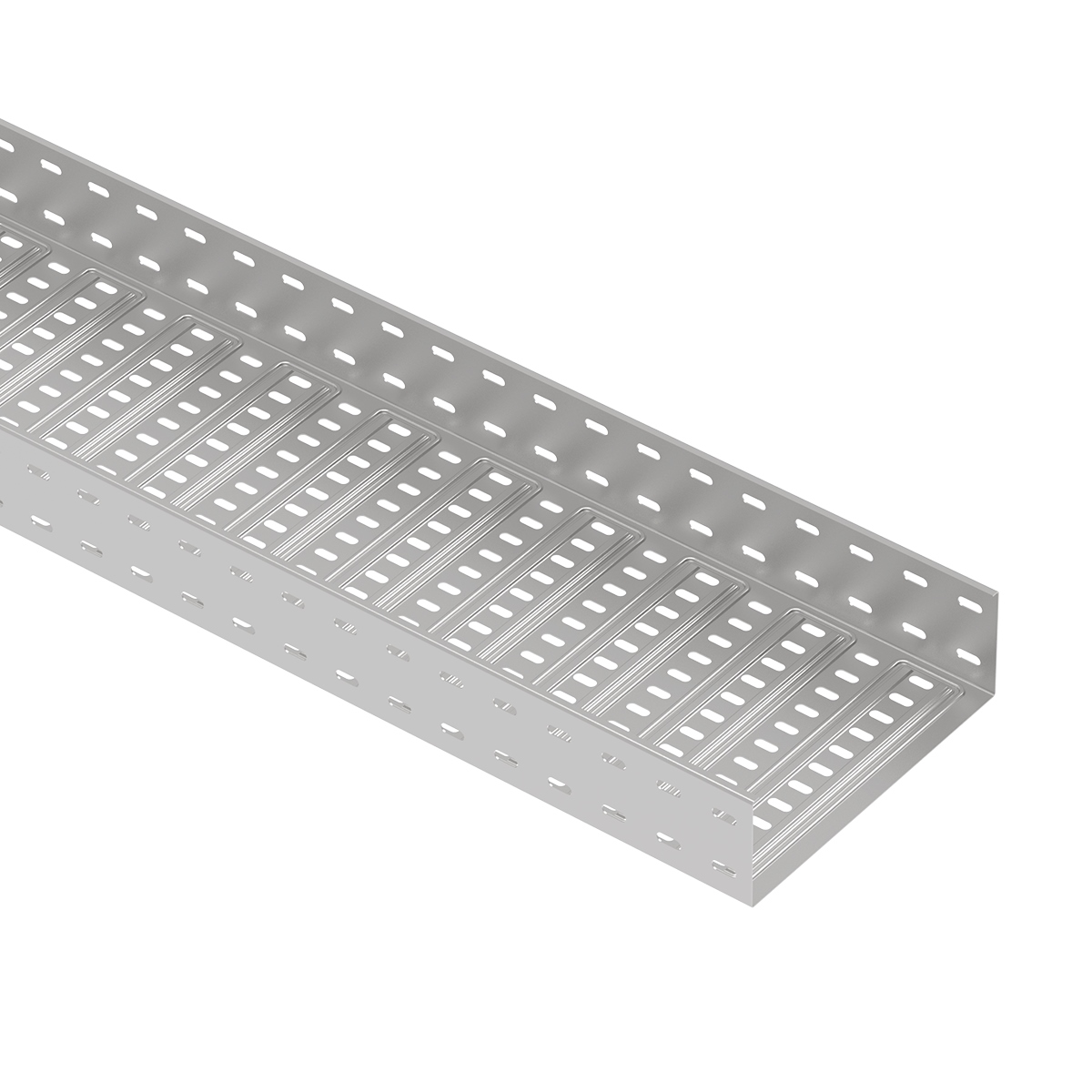
A pre galvanized perforated cable tray is made from steel sheet that already carries a zinc coating. The manufacturer then cuts, punches and forms the sheet into the required tray profile.
Process sequence: sheet galvanizing → cutting and punching → forming → inspection.
The coating on the original sheet surfaces is controlled during continuous production. However, subsequent cutting and punching create exposed steel cross-sections at the ends and around the holes.
A hot dip galvanized perforated cable tray is fabricated first. After cleaning and surface preparation, the finished steel component is immersed in molten zinc.
Process sequence: cutting and punching → forming and any required welding → surface preparation → galvanizing → inspection.
This sequence allows zinc to coat accessible fabricated surfaces, including the hole edges and cut ends present at the time of galvanizing. Final inspection must still verify coverage and finish quality.

| Comparison | GI: Pre-Galvanized | HDG: Galvanized After Fabrication |
|---|---|---|
| Coating sequence | Sheet is coated before tray fabrication | Tray is coated after fabrication |
| Punched holes and cut ends | Newly exposed cross-sections do not carry the original sheet coating | Fabricated edges can receive zinc during immersion |
| Coating specification | Often expressed through sheet coating mass designations | Often expressed through coating thickness requirements for fabricated articles |
| Surface appearance | Usually relatively smooth and consistent | May show variations in texture and shade |
| Application considerations | Often considered for dry, controlled environments | Often considered for outdoor exposure requiring greater zinc protection |
| Initial price | Often lower for a comparable tray specification | Often higher because of the additional finishing process and handling |
| Field modifications | Newly exposed areas require assessment and treatment as specified | Cutting after galvanizing also creates exposed areas requiring assessment and repair |
These are process-level differences, not substitutes for a product specification. Actual performance depends on the coating supplied, fabrication quality, exposure and maintenance.
Zinc protects steel through a barrier layer and sacrificial action. Under comparable exposure, a greater available zinc thickness generally provides a longer period of protection. However, the GI or HDG label alone does not establish coating thickness.
Pre-galvanized sheet specifications commonly use coating mass, expressed in g/m². Confirm whether the stated value is the total for both surfaces. HDG specifications commonly use coating thickness in micrometres, or µm, with requirements linked to the applicable standard, material category and steel thickness.
Do not compare a double-sided coating mass directly with a single-surface thickness value. Ask for the designation, measurement basis and supporting inspection records.
Similarly, do not assume that every HDG tray has an 85 µm coating or that every GI tray has the same zinc mass. The required values must be established for the actual product and project.
Perforated trays contain many punched openings, making edge protection an important part of the comparison.
On a GI tray, the surrounding zinc may provide sacrificial protection to small exposed areas. Its effectiveness depends on factors such as the exposed area, available zinc and service environment. This protection should not be treated as a guarantee against edge corrosion.
With HDG after fabrication, punched edges and cut ends are present during galvanizing and can receive a coating. This is a useful advantage where moisture exposure makes those details more demanding.
The practical inspection question is: Are the edges, holes and connections adequately protected for the intended installation?
A bright surface does not establish superior corrosion resistance, and a duller finish does not automatically indicate a defect.
For HDG trays, inspect coating coverage, adherence and thickness against the agreed requirements. Also check for sharp projections, obstructed holes and features that interfere with cable handling or assembly. For GI trays, examine the sheet surfaces, formed areas and exposed edges.
Location names alone are insufficient. A dry indoor electrical room and an indoor washdown area may need different corrosion protection, even within the same building.
| Installation condition | Selection approach | Questions to resolve |
|---|---|---|
| Dry, controlled indoor space | Evaluate GI against the project specification | Is condensation unlikely? Is the specified coating adequate? |
| Sheltered outdoor route | Assess GI and HDG against actual exposure | Can wind-driven rain or persistent moisture reach the tray? |
| Exposed rooftop or outdoor route | Evaluate HDG after fabrication and its required coating | Are drainage and inspection access adequate? |
| Coastal location | Assess salt exposure and the complete protection system | How severe is salt deposition, and how often does the surface remain wet? |
| Industrial or washdown area | Assess compatibility with the actual substances present | What chemicals, concentrations and temperatures are involved? |
GI can offer good value where exposure is mild and the specified coating meets the design requirements. Paying for a different finish should serve an identifiable need, such as greater moisture exposure or a project coating requirement.
Rain, condensation and repeated wetting make coating selection more important. HDG after fabrication is often considered because of its edge coverage and the coating requirements available for fabricated steel.
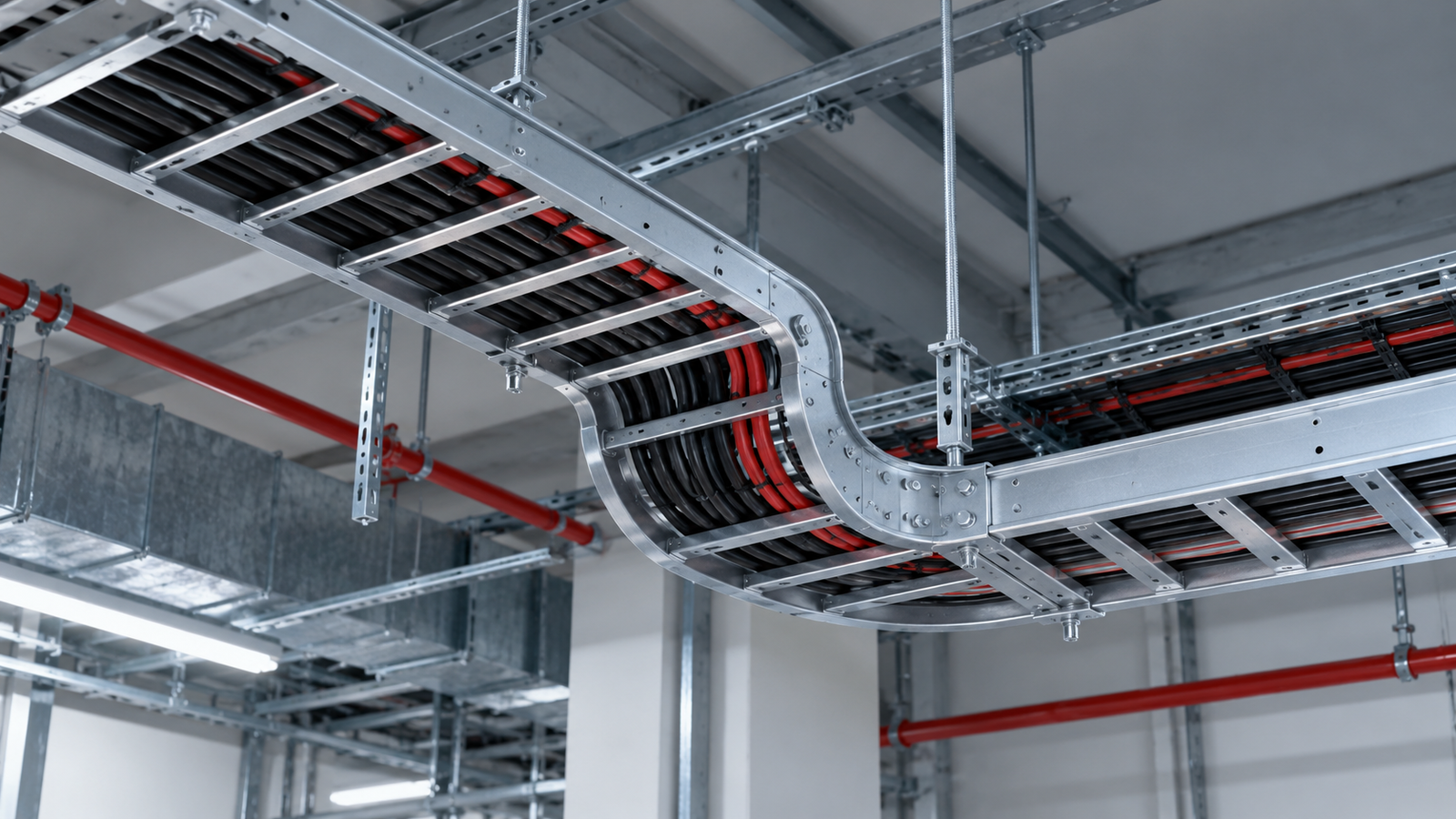
Drainage still matters. Perforations help water escape only when the installation and surrounding details allow it; they do not eliminate moisture exposure or trapped water at connections.
Salt exposure and chemical contact require more than a general “outdoor” designation. Assess the site's conditions before selecting HDG, an enhanced coating system or another material.
Where the exposure warrants it, compare alternatives such as stainless steel or an engineered duplex coating system. Suitability should be confirmed for the actual service conditions rather than inferred from the material name alone.
GI often has a lower initial price because the tray is fabricated from already-coated sheet. HDG involves surface preparation, batch galvanizing and additional handling after fabrication.
However, there is no universal price premium. Dimensions, steel grade, base metal thickness, zinc requirements, order quantity, fittings and delivery conditions all affect the quotation.
Compare GI vs HDG cable tray cost using the same tray design and supply scope. A lower price may otherwise reflect thinner steel, fewer accessories or a different coating requirement.
The financial impact of corrosion includes more than replacement metal. A tray installed above operating equipment may require access equipment, cable handling and an agreed shutdown before it can be replaced.
| Cost element | What to include |
|---|---|
| Supply | Straight sections, fittings, covers, supports and fasteners |
| Installation | Labour, lifting, access and required field treatment |
| Inspection and maintenance | Access, cleaning, coating assessment and repair |
| Replacement | Removal, new components, cable handling and reinstatement |
| Operational disruption | Shutdown or restricted access where applicable |
HDG may justify a higher purchase price where its protection reduces expected intervention. In a dry, accessible installation, a suitable GI specification may remain the more economical option.
Use the same assessment period for both options. Any lifecycle calculation should state its assumptions about inspection intervals, repair costs and service conditions rather than present uncertain savings as guaranteed results.
Need comparable GI and HDG quotations? Send ECTRAY your BOQ, tray dimensions, base metal thickness, quantities and required accessories. Include the coating specification where available so both options can be assessed against the same supply scope. Submit your BOQ for a quotation.
A galvanizing designation is not a load rating. Structural capacity depends on the steel properties, base metal thickness, tray geometry, perforation pattern, reinforcement, connections and support arrangement.
A thicker zinc coating does not establish that an HDG tray carries a greater cable load than a GI tray. Compare the documented load performance of the actual product at the proposed support span.
Specify base metal thickness separately from coating thickness so that a coating measurement is not mistaken for structural steel thickness.
Site cutting or drilling creates new exposed areas on either tray type. Deburr the edges, remove swarf and use the repair procedure required by the project and manufacturer.
For damaged HDG coatings, ASTM A780/A780M describes repair methods where that practice is applicable. Repair requirements include more than selecting a zinc-rich paint; surface preparation and the specified repair system also matter.
Assess corrosion protection across the complete assembly. Connection plates, brackets and fasteners should be suitable for the same exposure as the tray, with material compatibility considered where different metals are joined.
Verify fit and required electrical continuity arrangements separately. A galvanizing finish does not by itself demonstrate compliance with the installation's bonding requirements.
Keep trays dry, supported and ventilated during storage. Avoid tightly nested stacks that retain water, and inspect deliveries for coating damage before installation.
Both finishes need appropriate storage. Moisture trapped between galvanized surfaces can cause wet storage stain; choosing HDG does not remove the need for moisture control.
A quotation that only says “galvanized perforated cable tray” leaves important details unresolved. Include the following information to make offers comparable.
| Specification item | Information to provide or confirm |
|---|---|
| Dimensions | Width, side height and straight-section length |
| Steel specification | Grade, base metal thickness and tolerances |
| Tray construction | Perforation pattern, edge profile and flat or reinforced base |
| Structural requirements | Cable load, support span and required performance evidence |
| Galvanizing sequence | Pre-galvanized sheet or hot-dip galvanized after fabrication |
| Coating requirements | Applicable standard, designation, coating mass or thickness, and inspection basis |
| Environment | Indoor or outdoor exposure, condensation, salts and chemicals |
| Supply scope | Fittings, covers, dividers, supports, fasteners and connection components |
| Documentation | Material records and relevant coating inspection reports |
For example, ASTM A653/A653M addresses continuously hot-dip-coated steel sheet, while ASTM A123/A123M addresses relevant batch-galvanized iron and steel products. Select the applicable specification and edition for the project; these standards are not interchangeable, and mentioning one does not establish that a supplied product complies with it.
The terminology can be ambiguous. In this comparison, GI means steel sheet galvanized before tray fabrication, and HDG means the tray is galvanized after fabrication. Both can involve a hot-dip process, so the manufacturing sequence should be stated explicitly.
Some sheltered, mildly corrosive installations may permit a suitably specified GI tray. Confirm exposure, edge protection, maintenance access and project requirements. Open-air, persistently wet or salt-exposed locations require a more demanding assessment.
There is no fixed lifespan determined by the abbreviation alone. Coating thickness, exposure, detailing, handling damage and maintenance all affect performance. An estimate of time to first maintenance is also different from the total service life of the tray.
No. It can provide better value where the protection is needed and future repairs are costly. In a dry indoor environment, GI may meet the requirements at a lower total cost. Compare both options over the same period and with explicit assumptions.
For otherwise identical trays, a greater zinc coating mass adds weight. However, the overall weight comparison depends mainly on the actual dimensions, steel thickness and design. Request the mass per metre for each quoted product.
No. Inspect coatings, field modifications and connections according to the maintenance plan. Address damage and moisture traps before they lead to more extensive deterioration.
The GI vs HDG perforated cable tray decision should connect three factors: the actual exposure, a measurable coating specification and the cost of future access and maintenance.
GI is worth evaluating for controlled environments where its coating and edge protection meet the requirements. HDG after fabrication is worth evaluating where outdoor exposure and fabricated-edge coverage justify the additional process. More aggressive conditions may require a different protection system.
Choosing a finish is easier when the exposure conditions and purchasing specifications are clear. Share your drawings or BOQ, tray sizes, quantities, installation environment and required coating standard with ECTRAY. If some details are still undecided, identify them in your enquiry so they can be clarified before quotation.