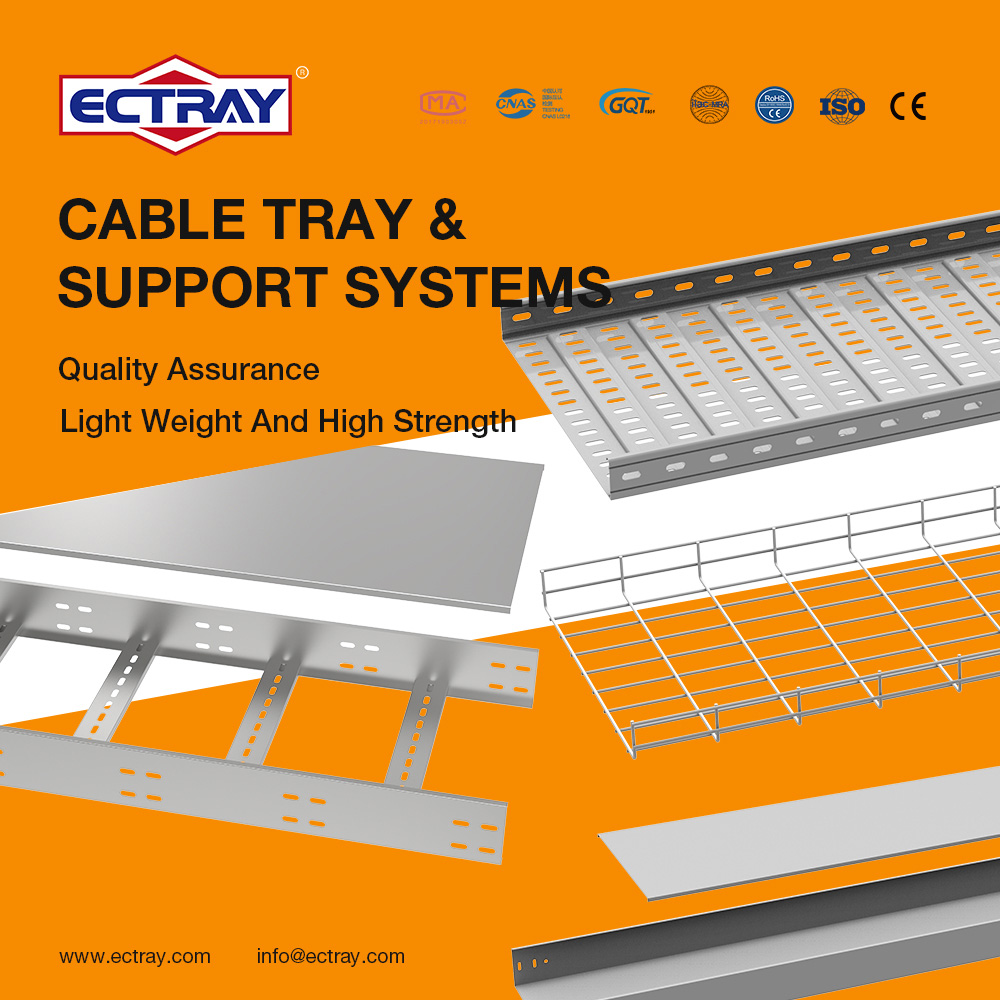
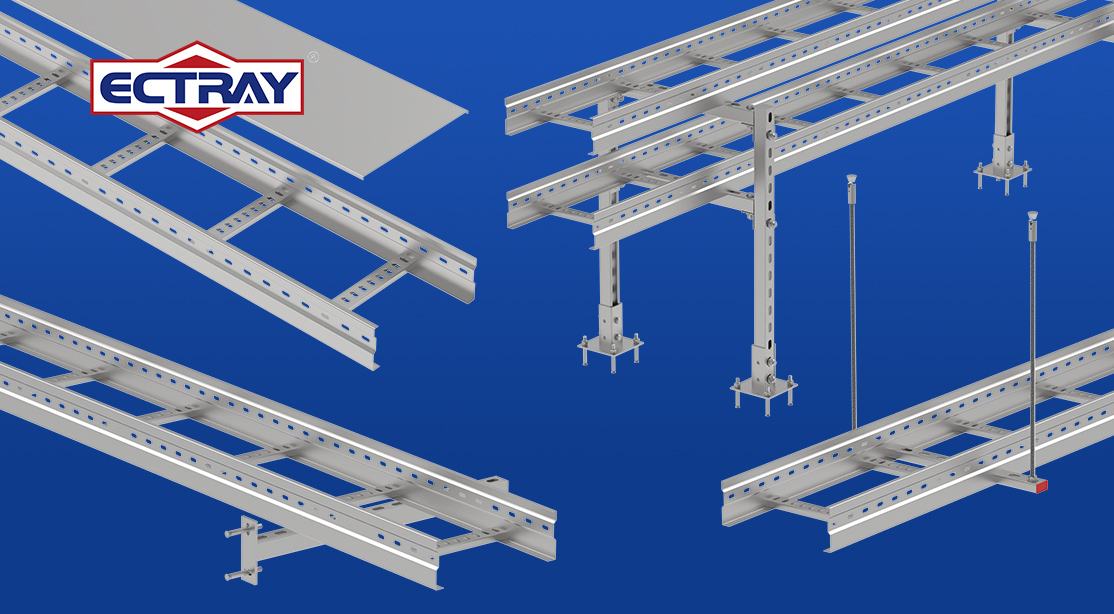
Aluminum cable ladders are widely used for routing power, control, instrumentation, and communication cables where low structural weight, corrosion resistance, and installation efficiency are important project considerations.
Their open ladder structure provides accessible cable routing and natural ventilation, while the lower density of aluminum can simplify transportation, lifting, and elevated installation.
However, material selection should not be based on weight or corrosion resistance alone. Cable load, support span, side-rail design, material thickness, rung construction, environmental exposure, fittings, thermal expansion, and the supporting structure all affect system performance.
This guide explains how aluminum cable ladder systems work, their main advantages, how they compare with steel cable ladders, and what engineers and procurement teams should consider when selecting a system for industrial, power, renewable-energy, transportation, and infrastructure projects.
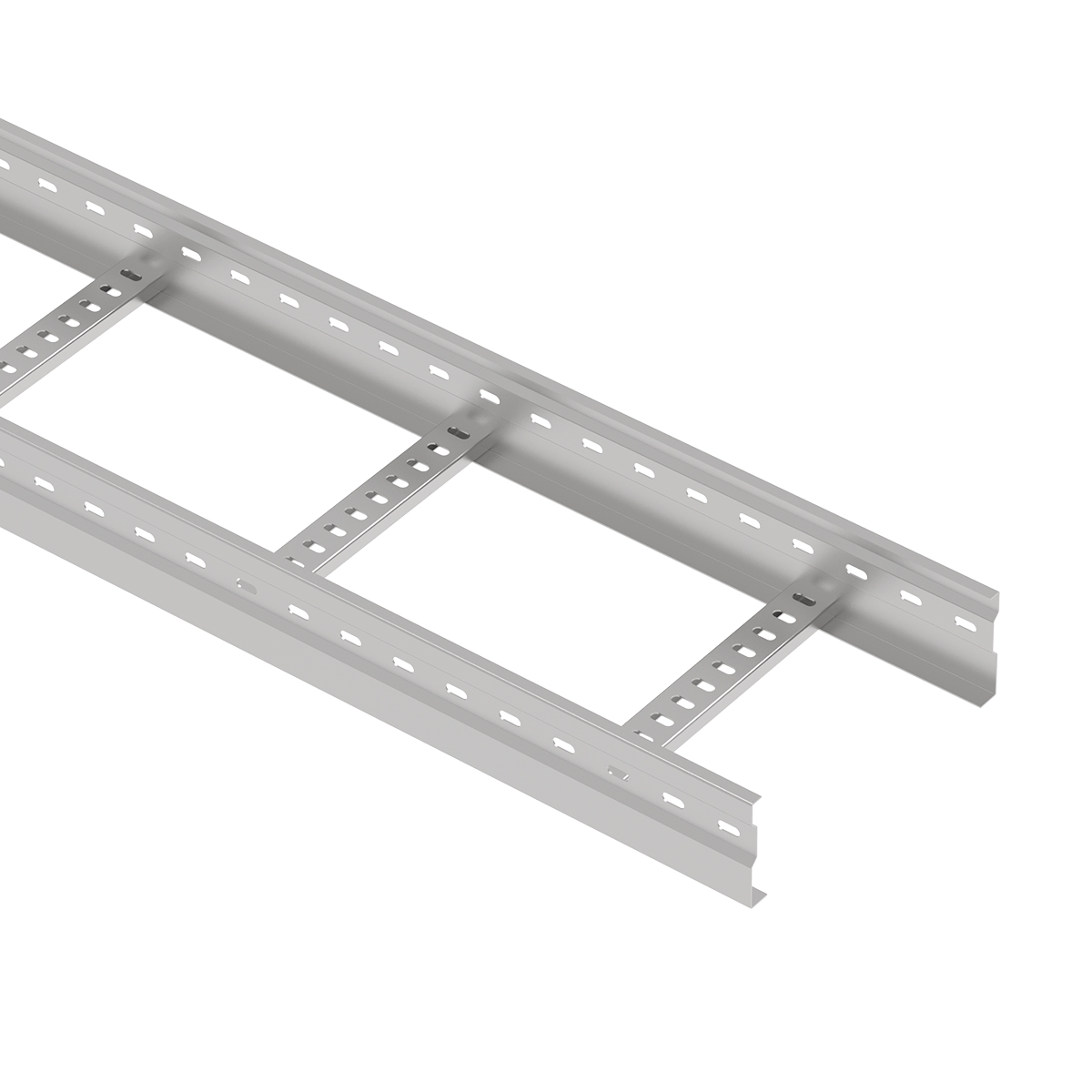
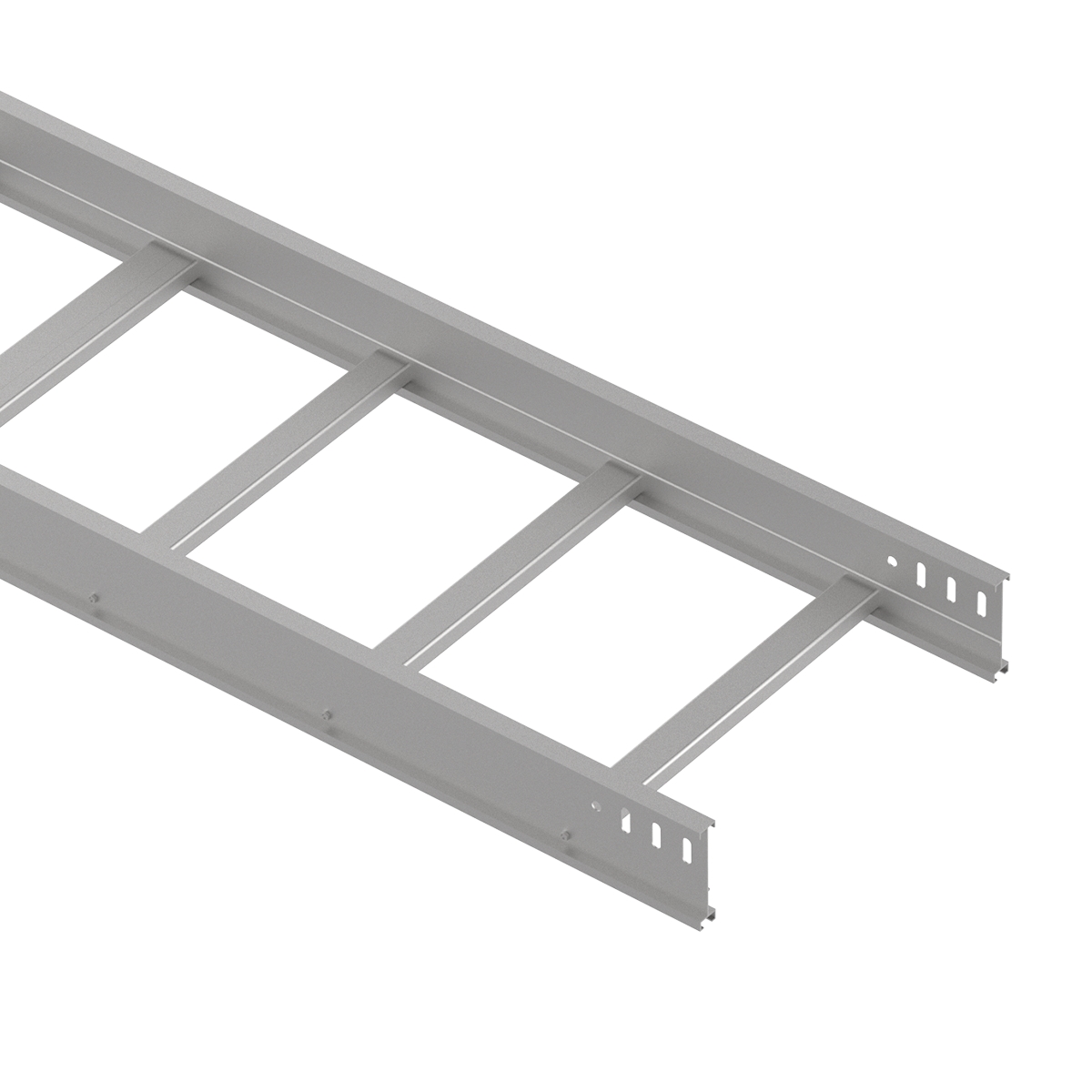
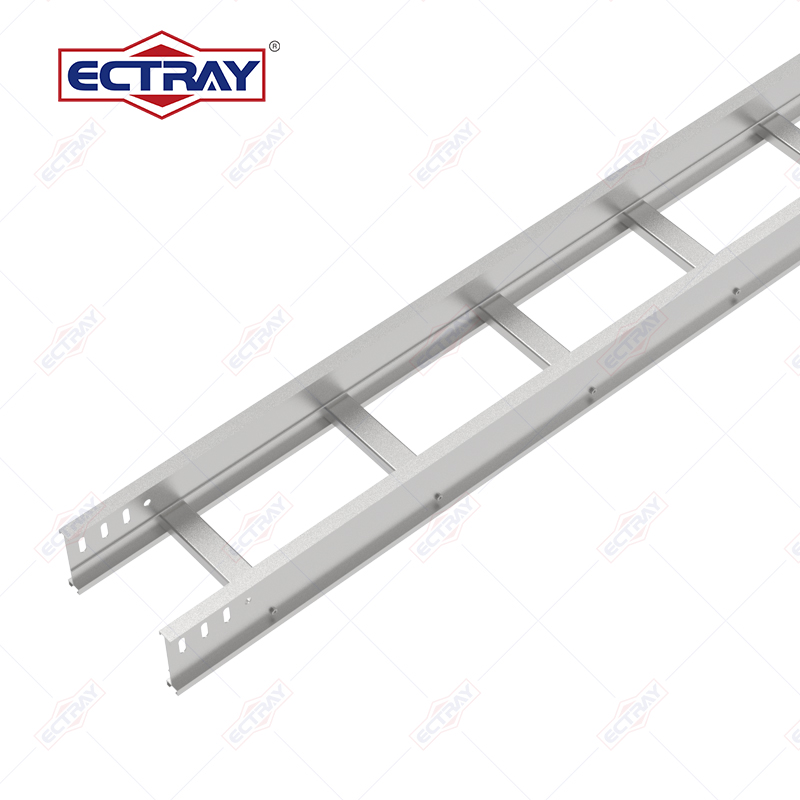
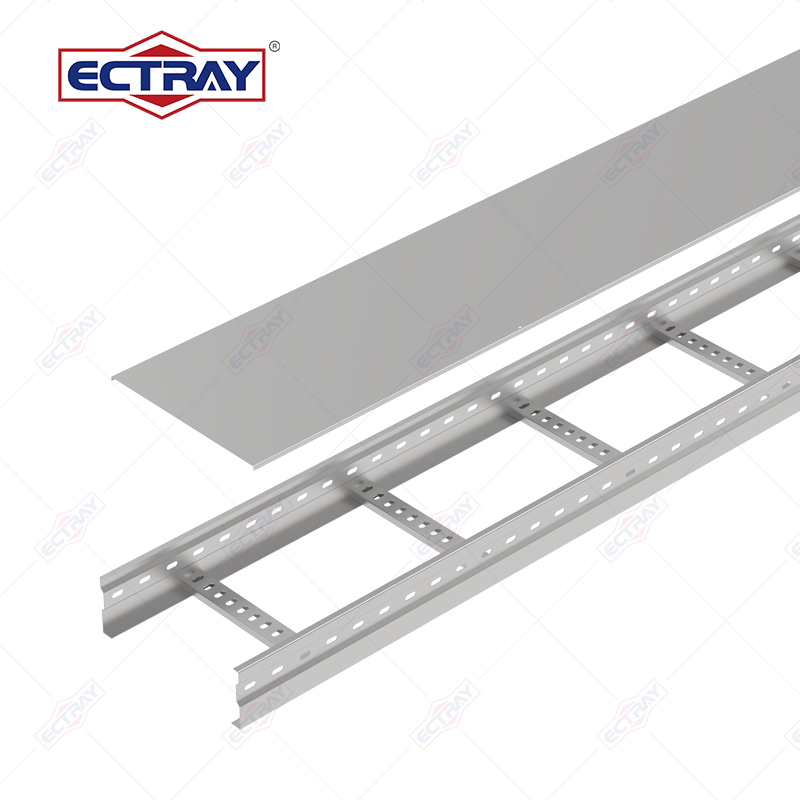
An aluminum cable ladder is a ladder-type cable support system manufactured from aluminum alloy. It consists of two longitudinal side rails connected by regularly spaced transverse rungs.
The open structure supports installed cables while keeping them accessible for laying, inspection, maintenance, and future modification.
A complete aluminum cable ladder system may include straight sections, horizontal bends, vertical risers, tees, crosses, reducers, splice plates, hold-down clamps, covers, and structural supports.
During system selection, engineers typically consider cable quantity, cable weight, ladder width, side-rail height, rung spacing, support span, route geometry, and the installation environment.

Aluminum is selected for cable ladder systems mainly because it combines relatively low structural weight with good atmospheric corrosion resistance and practical installation advantages.
Its suitability depends on the complete project requirement rather than on material properties alone.
Aluminum has a significantly lower density than steel, which can reduce the self-weight of the cable ladder system depending on the ladder profile, dimensions, and structural design.
Lower system weight can provide practical advantages for elevated routes, rooftops, retrofit projects, and installations where the supporting structure has limited dead-load capacity.
It can also simplify:
However, lower self-weight does not automatically mean that an aluminum cable ladder can use a longer support span than a steel system.
Structural performance should be evaluated from the complete ladder design, including alloy, side-rail geometry, material thickness, rung construction, cable load, support configuration, and support span.
Aluminum naturally develops a thin oxide layer when exposed to air. This provides good resistance to atmospheric corrosion in many indoor and outdoor environments.
This characteristic can make aluminum suitable for applications where moisture, humidity, or outdoor exposure are important considerations.
However, aluminum should not be treated as universally corrosion-proof.
Actual performance depends on:
- - Environmental contaminants
- - Chloride exposure
- - Chemicals
- - Temperature
- - Drainage conditions
- - Alloy selection
- - Surface treatment
- - Contact with dissimilar metals
Coastal and chemical environments require particular attention because the corrosion behavior of aluminum can change significantly depending on the specific exposure.
The lower self-weight of aluminum can simplify transportation, lifting, positioning, and elevated installation.
This can be useful in plant rooms, rooftops, infrastructure projects, and retrofit environments where site access is limited.
Aluminum cable ladder sections can also be combined with modular fittings and accessories to accommodate changes in direction, elevation, and cable-route configuration.
Support spacing, however, should still be determined from verified load/span information rather than from material weight alone.
The ladder-style construction leaves much of the cable surface exposed and accessible.
This can simplify cable laying, identification, inspection, maintenance, additions, and route modification.
The open structure also allows natural air circulation around installed cables.
These are characteristics of the ladder structure itself and are not exclusive to aluminum systems.
| Advantage | Engineering Value |
|---|---|
| Lower Self-Weight | Easier handling and reduced structural dead load |
| Corrosion Resistance | Suitable for many indoor and outdoor environments |
| Open Structure | Accessible cable routing and ventilation |
| Installation Efficiency | Easier lifting and positioning |
| Material Recyclability | Aluminum can be recycled |
| Flexible Routing | Compatible with bends, risers, tees, crosses and reducers |
The main advantage of aluminum is therefore not one individual property, but the combination of lower system weight, corrosion behavior, and installation practicality.
Final selection should still be based on actual project conditions.
Aluminum and steel cable ladders can both provide reliable cable support when correctly designed and installed.
The correct choice depends on the project rather than on a universal material preference.
| Factor | Aluminum Cable Ladder | Steel Cable Ladder |
|---|---|---|
| Self-Weight | Lower | Higher |
| Structural Performance | Depends on profile and design | Depends on profile and design |
| Corrosion Resistance | Good inherent atmospheric resistance | Depends on material and finish |
| Handling | Generally easier | Generally heavier |
| Structural Dead Load | Lower | Higher |
| Surface Protection | Additional coating may not be required in some environments | GI, HDG, ZM or coating may be used |
| Heavy-Duty Applications | Requires verified load/span selection | Commonly used for demanding structural loads |
| Outdoor Applications | Environment-specific | Material/finish-specific |
Neither material is universally better.
Aluminum may be attractive where lower dead load, handling efficiency, and atmospheric corrosion resistance are priorities.
Steel may be preferred where specific structural requirements, established project specifications, or particular heavy-duty configurations favor steel construction.
Material selection should consider cable load, support span, environment, weight, corrosion exposure, cost, installation method, and project standard.
Aluminum cable ladder selection involves several dimensions that affect cable capacity, structural performance, and installation.
Width determines the available routing area for installed cables.
Selection should consider:
A wider ladder can accommodate more cables, but width alone does not determine structural capacity.
Total cable weight must still be considered.
Side rails form the main longitudinal structural members of a ladder-type cable tray.
Their height and profile influence stiffness and structural performance.
However, a taller side rail should not automatically be interpreted as permitting a longer support span.
The complete ladder profile, thickness, material properties, connections, cable load, and support conditions must be considered together.
Straight sections are normally supplied in modular lengths according to manufacturer and project requirements.
Section length affects:
Longer sections can reduce the number of splice connections, while shorter sections may be easier to transport and install in restricted areas.
The appropriate length should therefore be coordinated with the project layout and support system.
Material thickness influences stiffness and structural performance, but should not be selected independently.
Thickness should be evaluated together with:
The correct thickness should be confirmed using manufacturer technical information or project-specific engineering data.
Rung spacing determines how frequently installed cables are supported across the ladder route.
The correct spacing depends on cable type, cable diameter, cable weight, bending requirements, and project specifications.
Rather than applying one generic rung-spacing value, designers should select spacing appropriate to the cable system being installed.
Load capacity and support span are closely related and should always be evaluated together.
The structural capacity of an aluminum cable ladder depends on the complete system configuration.
Important factors include:
No single dimension determines load capacity on its own.
For engineering selection, manufacturer load data or verified structural calculations should be used.
Support span is the distance between adjacent cable ladder supports.
As span increases, bending demand and deflection generally increase.
The same cable ladder profile may therefore carry different allowable loads at different support spans.
Shorter spans usually reduce structural demand, while longer spans require greater structural capacity from the ladder and supporting system.
Environmental conditions such as vibration, wind, temperature variation, or other project-specific loads may also affect the final support design.
Higher Cable Load + Longer Support Span = Greater Structural Requirement
Designers should first determine the expected cable load per unit length and then compare it with the selected ladder's verified load/span data.
Future cable additions should also be considered where the project requires spare capacity.
For heavy-duty or long-span applications, project-specific structural review may be required.
Corrosion resistance is one of the main reasons aluminum is considered for cable support systems.
However, environmental conditions should always be evaluated individually.
In normal atmospheric conditions, aluminum forms a naturally protective oxide layer that can help slow further corrosion.
This makes it suitable for many indoor, commercial, industrial, and outdoor environments.
Airborne pollutants, salts, humidity, and process contaminants can still influence performance.
Aluminum can perform well in humid and outdoor environments, but installation details remain important.
Design considerations may include:
Where project conditions are more demanding, additional surface treatment or alternative materials may need to be considered.
Coastal environments introduce chloride exposure, salt-laden air, humidity, and repeated wet/dry cycles.
Aluminum may be suitable for some coastal projects, but alloy selection, chloride exposure, drainage, fastener compatibility, and galvanic isolation should be evaluated according to the actual project conditions.
The material should not automatically be assumed to be the best option for every coastal environment.
Chemical exposure can significantly change aluminum corrosion behavior.
Performance depends on:
For chemical plants and process facilities, material compatibility should be reviewed against the actual chemicals present.
Where compatibility cannot be confirmed, stainless steel or another material may be more appropriate.
Aluminum may be considered where the following project conditions apply:
| Project Condition | Aluminum May Be Considered When... |
|---|---|
| Elevated Installation | Lower structural dead load is beneficial |
| Long Cable Routes | Easier handling and transportation are important |
| Outdoor Installation | Atmospheric corrosion resistance is required |
| Structural Weight Limits | Lower cable support self-weight is important |
| Retrofit Projects | Site access or lifting conditions are restricted |
| Coastal / Chemical Areas | Material compatibility has been verified |
| Heavy Cable Loads | Verified aluminum load/span data satisfies project requirements |
The selection should not be based on material weight alone.
Aluminum is appropriate when its structural capacity, corrosion behavior, installation characteristics, and total project requirements align with the application.
A complete aluminum cable ladder system requires fittings and accessories for changes in direction, elevation, width, and cable route configuration.
Horizontal bends allow the cable route to change direction while maintaining continuous cable support.
Selection should consider ladder width, bend radius, cable bending requirements, and route geometry.
Fittings should be properly supported according to system design and manufacturer recommendations.
Vertical risers allow the cable route to change elevation.
Both internal and external risers may be used depending on route direction.
Selection should consider cable bending radius, ladder width, cable load, and support arrangement.
Tees create three-way branch routes, while crosses create four-way intersections.
These fittings should be supported appropriately so that they are not required to carry unsupported loads from several directions.
Reducers transition between different ladder widths.
They are useful where cable quantities reduce along a route or where a main ladder feeds a smaller branch system.
Splice plates connect adjacent cable ladder sections.
Connection design should match the ladder system and manufacturer requirements.
Expansion-type connections may also be required where thermal movement must be accommodated.
Hold-down clamps secure cable ladders to support structures.
Selection should consider side-rail profile, support design, environmental loads, thermal movement, and fastener compatibility.
Covers may be used where cables require additional protection from weather, falling objects, contamination, or other environmental exposure.
Support brackets transfer the ladder and cable load to the building structure.
Both components should be selected as part of the complete system.
Material compatibility is especially important with aluminum systems.
Galvanic corrosion can occur when aluminum is electrically connected to a dissimilar metal in the presence of an electrolyte such as moisture.
The severity depends on:
Where required, designers may use isolation pads, non-conductive washers, compatible fasteners, coatings, or other approved separation methods.
Installation practices can affect long-term system performance.
Aluminum cable ladders are relatively lightweight but can still be damaged by incorrect lifting or handling.
Sections should be supported adequately during transportation and installation to avoid bending, twisting, or local damage.
Dragging ladder sections across rough surfaces should be avoided where possible.
Support span should be selected according to verified load/span performance.
Generic spacing values should not replace manufacturer technical data.
For heavy-duty or long-span routes, structural calculations may be required.
Fasteners should be compatible with the ladder material, support system, and environmental conditions.
Connections should be installed according to manufacturer requirements and tightened sufficiently to maintain mechanical stability without damaging the aluminum profile.
Where aluminum contacts another metal, galvanic corrosion risk should be reviewed.
Appropriate isolation or compatible connection details may be needed, particularly in outdoor, humid, coastal, or industrial environments.
Grounding and bonding requirements for aluminum cable ladder systems depend on the electrical design, connection method, applicable electrical code, manufacturer instructions, and project specifications.
Where electrical continuity is required, suitable bonding components, grounding conductors, or approved connection methods should be used according to the applicable requirements.
The cable ladder should not automatically be assumed to function as an equipment grounding conductor unless the complete system has been designed and approved for that purpose.
Thermal expansion should be considered in long aluminum cable ladder runs, particularly outdoors or where significant temperature changes are expected.
Aluminum expands and contracts with temperature changes.
Depending on route length and temperature range, projects may require:
Manufacturer recommendations and project-specific thermal conditions should be reviewed during design.
Aluminum cable ladders can be used across a wide range of project types where their weight and corrosion characteristics suit the application.
Industrial facilities may use aluminum cable ladders for power, control, and instrumentation cable routes.
Their lower self-weight can simplify installation on elevated structures, while the open ladder design supports inspection and future cable modifications.
Material suitability should still be confirmed for process vapors, chemicals, humidity, and other environmental conditions.
Aluminum cable ladders can be considered for power plants, substations, and utility installations where cable routing, structural dead load, outdoor exposure, and accessibility are important.
Structural selection should be based on actual cable load and support span.
Solar and renewable-energy projects often involve long outdoor cable routes and elevated installation.
Aluminum may be useful where lower system weight and atmospheric corrosion resistance support the project design.
Cable type, environmental exposure, support spacing, and dissimilar metal interfaces should still be evaluated.
Airports, railway stations, bridges, tunnels, and other infrastructure projects may use aluminum cable ladders where accessible cable routing and reduced structural weight are beneficial.
Material selection should account for environmental exposure, vibration, moisture, salts, and maintenance conditions.
Aluminum ladder systems may be used for selected power and communication cable routes in data centers.
The open structure can provide accessible routing and support future cable modifications.
System selection should consider cable load, routing density, structural support, and segregation requirements.
Aluminum may be considered for outdoor and coastal projects, but environmental suitability should be verified rather than assumed.
Important factors include:
For particularly aggressive environments, alternative materials such as SS316 may also need to be evaluated.
Selection should begin with project requirements rather than material preference.
| Information | Project Requirement |
|---|---|
| Cable Type | Power / Control / Instrumentation |
| Cable Quantity | Based on the project cable schedule and planned cable routes |
| Cable Load | Total cable weight per meter, calculated from cable datasheets |
| Ladder Width | 100mm-1000mm |
| Side-Rail Height | 100mm、150mm、200mm |
| Material Thickness | 1.5mm、2.5mm、3.0mm |
| Rung Spacing | Selected according to cable type, cable size and project specification |
| Required Support Span | Center-to-center distance between adjacent supports; verify against load/span data |
| Installation | Indoor / Outdoor |
| Environment | Normal / Coastal / Industrial / Chemical |
| Fittings | Bend / Tee / Cross / Riser / Reducer |
| Cover | Yes / No |
| Project Standard | ___ |
| BOQ / Drawings | Available / Not Available |
The final configuration should balance cable capacity, load, span, environmental exposure, system weight, fittings, support structure, and future cable requirements.
Low weight is useful, but it is only one design factor.
Load capacity, support span, structural stiffness, environment, and project standards must also be checked.
Aluminum offers good atmospheric corrosion resistance, but aggressive chemicals, chloride exposure, standing moisture, and galvanic coupling can still cause corrosion.
Long runs and outdoor installations should account for thermal movement.
Restrained expansion can place stress on joints, supports, anchors, and ladder sections.
Galvanic corrosion can occur when aluminum is connected to a dissimilar metal in the presence of moisture or another electrolyte.
Material compatibility and isolation should therefore be considered during design.
A ladder can be physically wide enough to hold the cables but still be structurally unsuitable for the installed load.
Width and cable weight should be checked separately.
A standard spacing copied from another project may not be suitable for a different ladder profile or cable load.
Support spacing should be based on the selected ladder system and verified technical data.
An aluminum cable ladder is an open cable support system made from aluminum alloy, consisting of two side rails connected by transverse rungs.
Aluminum has a lower density than steel, so an aluminum ladder system can have lower self-weight depending on its profile, dimensions, and structural design.
It can be suitable for many outdoor environments, but material compatibility should be evaluated according to moisture, chloride exposure, chemicals, temperature, drainage, and project specifications.
Yes, where the selected ladder configuration has sufficient verified structural capacity. Heavy cable loads should be evaluated together with support span, side-rail design, thickness, and support configuration.
Load capacity depends on alloy, side-rail profile, material thickness, rung design, ladder width, support span, connections, and the complete structural configuration.
There is no single universal support span. The allowable span depends on the specific ladder design, cable load, structural profile, manufacturer data, and project requirements.
Grounding and bonding requirements depend on the electrical design, applicable code, system configuration, manufacturer instructions, and project specifications.
Aluminum may be preferred where lower weight and inherent atmospheric corrosion resistance are important. HDG steel may be preferred for specific heavy-duty or project-standard requirements.
Load, span, environment, cost, and structural requirements should be compared before selection.
They may be suitable for some coastal projects, but chloride exposure, alloy selection, fasteners, drainage, galvanic isolation, and project-specific corrosion requirements should be evaluated.
Typical fittings include horizontal bends, vertical risers, tees, crosses, reducers, splice plates, covers, clamps, and support brackets.
Aluminum cable ladders combine relatively low structural weight, corrosion resistance, accessible cable routing, and flexible system configuration.
However, aluminum should not be selected based on weight or corrosion resistance alone. Cable load, support span, side-rail design, material thickness, environmental exposure, thermal expansion, fittings, and support configuration should all be considered.
For industrial, power, renewable-energy, transportation, and infrastructure projects, the final cable ladder configuration should be confirmed using project-specific requirements and verified technical data.
Need help selecting an aluminum cable ladder?